Ceiling Fan Installation in Tallahassee, FL
Fans are a small project with a few details that decide how simple it is: what is in the ceiling now, how the room is switched, and whether the location is covered outdoor space.
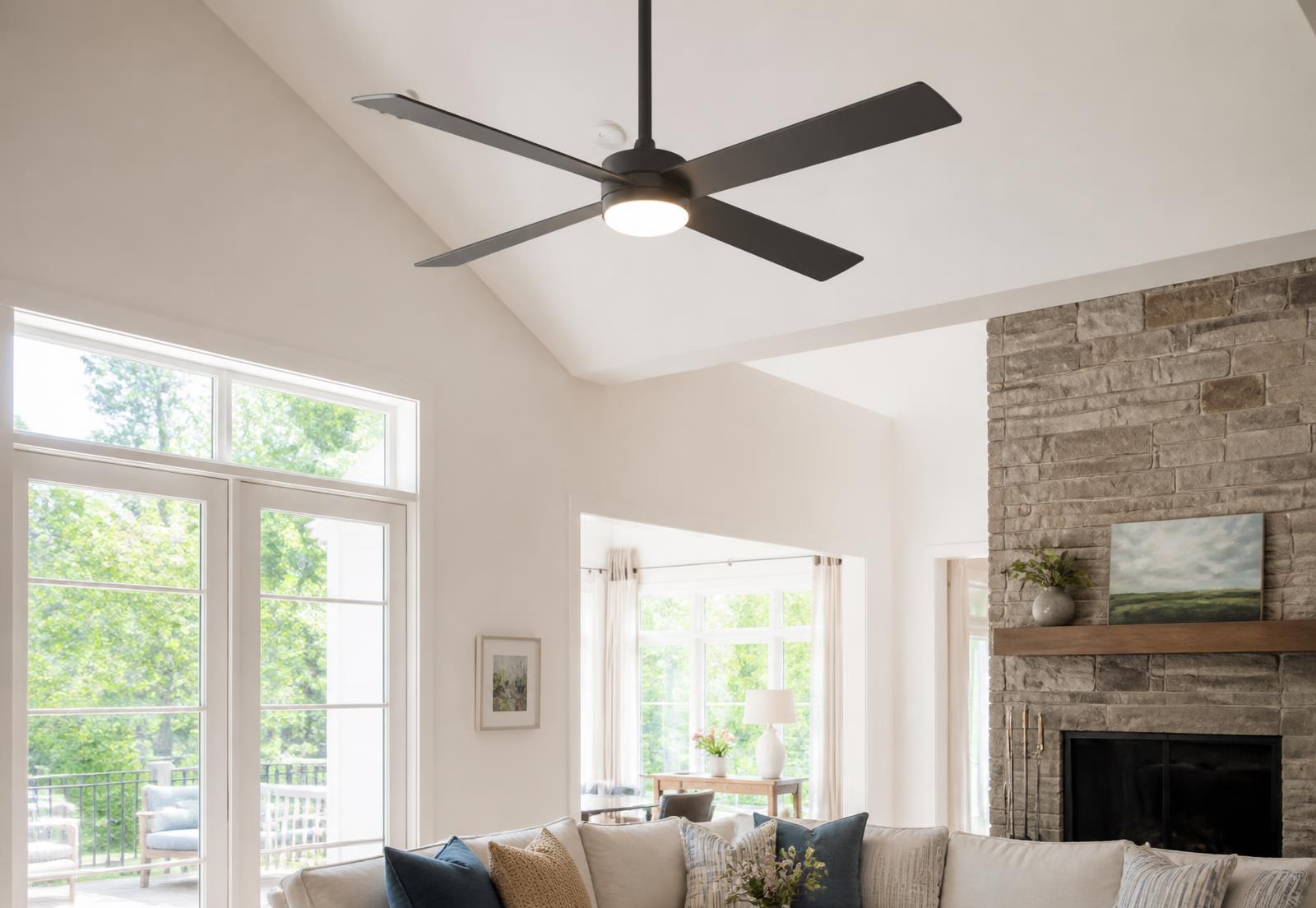
Three very different jobs under one name
Swapping an existing fan for a new one on an existing fan-rated box is the simplest version. Replacing a light fixture with a fan is a step up, because standard fixture boxes are not built to carry a fan's weight and movement — a fan-rated box or brace is needed. Adding a fan to a room with no ceiling box at all is a wiring project: a new circuit path, a box, and usually switch work.
Describing which of the three you are looking at, even roughly, is the fastest way to get a useful first conversation.
Details that change the scope
- Ceiling height and slope — vaulted ceilings need a downrod and sometimes a sloped-ceiling adapter
- Whether the fan and light should be controlled separately, and whether there is a second wire in the wall for that
- Remote or wall control preference
- Attic access above the room, which affects how easily wiring can be routed
- Outdoor location: covered porches need damp-rated fans and open exposures need wet-rated units
Why the box matters more than the fan
A ceiling fan is a moving load. A box rated only for a light fixture can loosen over time under vibration, which is the usual cause of a wobbling fan that was previously fine. When people describe a fan that has always wobbled or has begun to drop, the mounting is the first thing to look at, not the blades.
Covered porches are a common Tallahassee request in late spring. Humidity and wind-driven rain are hard on indoor-rated fans, and a damp- or wet-rated unit is the difference between a fan that lasts and one that rusts through a season or two.
Related electrical requests
Service request
Tell us about your ceiling fan installation project
Submitting this form is a request to be contacted about electrical work at your property. No phone call is required to get started.